Why Does “Horse Arriving” Mean Success in Chinese?
Imagine wishing someone success — and talking about a horse instead.
In English, success is usually framed as an outcome: a promotion, a win, a result.
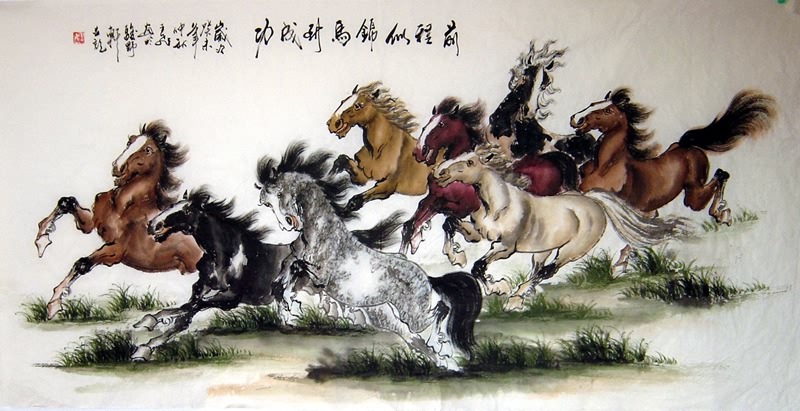
In Chinese, one of the most common Lunar New Year success wishes is mǎ dào chéng gōng (馬到成功), which literally means:
“The horse arrives, success follows.”![]()
No strategy.
No talent.
No luck.
Just a horse showing up.
At first glance, this sounds poetic — even a little strange. But this phrase isn’t decorative language. It reflects a very different way of thinking about success, one that is deeply embedded in Chinese culture and the Chinese language itself.
Why Horses, Not Luck?
In traditional Chinese society, horses were never symbols of chance or fortune. They were symbols of movement, execution, and usefulness.
A horse carried people, messages, supplies, and responsibility. It connected places. It made things happen. Without the horse, nothing moved forward.
So when Chinese culture talks about success through the image of a horse, it isn’t celebrating speed for its own sake. It is highlighting something more practical: progress begins when movement begins.
This is why the horse appears so often in expressions related to ability, initiative, and achievement. The horse is not lucky. It is effective.
“The Horse Arrives” — Then What?
What makes mǎ dào chéng gōng (马到成功) especially interesting is not the horse itself, but the order of events.
First, the horse arrives. (mǎ dào )
Then, success becomes possible. (chéng gōng)
The sentence structure reflects a belief: action comes before results.
In this logic, success is not something you wait for or hope will appear. It is something that follows once things are set in motion. Movement creates conditions. Conditions allow outcomes.
Once you notice this pattern, many Chinese expressions stop feeling symbolic and start feeling surprisingly practical.
Action With Direction
It’s also important to note that the horse is not admired simply for being fast.
Speed without direction is meaningless.
In Chinese culture, the horse matters because it moves with purpose. It carries weight. It endures distance. It serves a function beyond itself. Action is valued — but only when it leads somewhere.
This subtle distinction explains why horse-related expressions are often used to describe capable, reliable, or proactive people, not reckless ones.
Why This Matters for Language Learners (and Curious Readers)
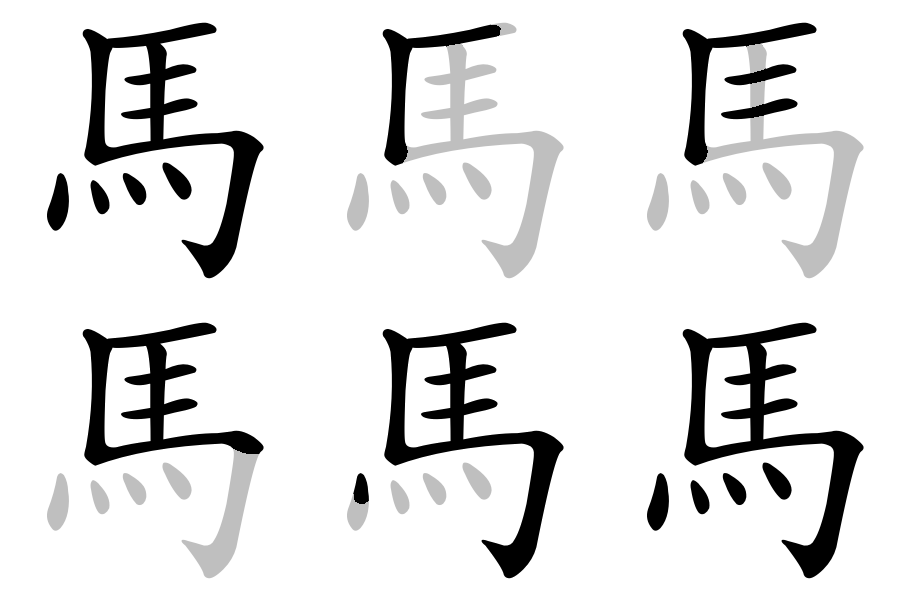
For people learning Chinese, mǎ dào chéng gōng (马到成功) is often one of the first Lunar New Year phrases they encounter. But it’s far from the only expression where horses are linked to progress or ability.
Here are a few common examples:
- 一马当先 (yī mǎ dāng xiān) — “to ride ahead on one horse”
Used to describe someone who takes initiative or leads through action.
- 千里马 (qiān lǐ mǎ) — “a thousand-mile horse”
A metaphor for talent or potential that deserves recognition.
- 马不停蹄 (mǎ bù tíng tí) — “the horse does not stop its hooves”
Used to describe continuous effort without pause.
What’s striking is that none of these expressions focus on luck or chance. Instead, they emphasize movement, endurance, and usefulness. The horse is never passive. It is always doing something.
Once learners recognize this pattern, horse-related expressions stop feeling like isolated idioms and start forming a meaningful group. They reflect a shared idea: progress comes from sustained, purposeful action.
Teaching the Year of the Horse: Three Quick Classroom Inspirations
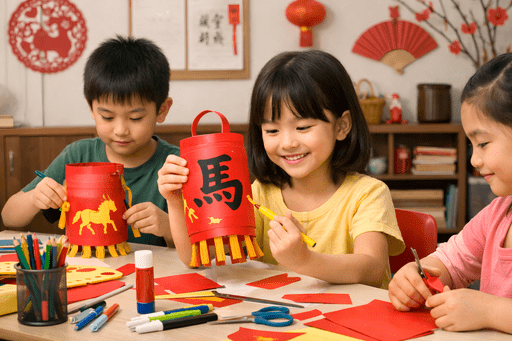
For teachers, the Year of the Horse offers simple ways to turn culture into meaningful language use. One option is a horse-themed lantern or zodiac craft, where students write the character 馬 or a phrase like mǎ dào chéng gōng on their work and explain its meaning in simple terms. Another is AI-generated horse calligraphy, inviting students to compare traditional brush styles with modern digital interpretations and discuss how movement or energy is visually expressed. A third idea is using mǎ dào chéng gōng as a sentence pattern, encouraging students to create their own “action → result” statements and reinforcing how Chinese often frames success as something that follows movement.
A Different Definition of Success
The Horse zodiac is often discussed as a personality type, especially around the Lunar New Year. But culturally, it functions more like a reminder.
Success is not something you wait for.
It is something that follows once things start moving.
And sometimes, all it takes to begin is letting the horse arrive.